The Advantage of Black Coffee Without Sugar for Improving Metabolism Naturally
The advantage of black coffee without sugar extends far beyond a morning energy boost. Indonesians consumed approximately 4.8 million bags of coffee between 2019 and 2022, and research reveals why this beverage deserves attention for metabolic health. One cup of black coffee contains around 96 mg of caffeine, and according to scientific studies, this compound can reduce body weight, Body Mass Index (BMI), as well as fat mass.
We’ll explore how black coffee without sugar benefits your metabolism through thermogenesis, accelerates fat oxidation, and regulates blood sugar levels. Understanding the benefits of drinking black coffee without sugar, including safe consumption limits of no more than four cups daily, empowers you to harness these advantages of black coffee without sugar effectively.
How Black Coffee Without Sugar Transforms Your Metabolic Rate
Caffeine acts as a metabolic activator in ways that extend beyond simple stimulation. The advantages of black coffee without sugar begin at the cellular level, where specific mechanisms enhance your body’s capacity to burn calories.
Caffeine Stimulates Thermogenesis and Heat Production
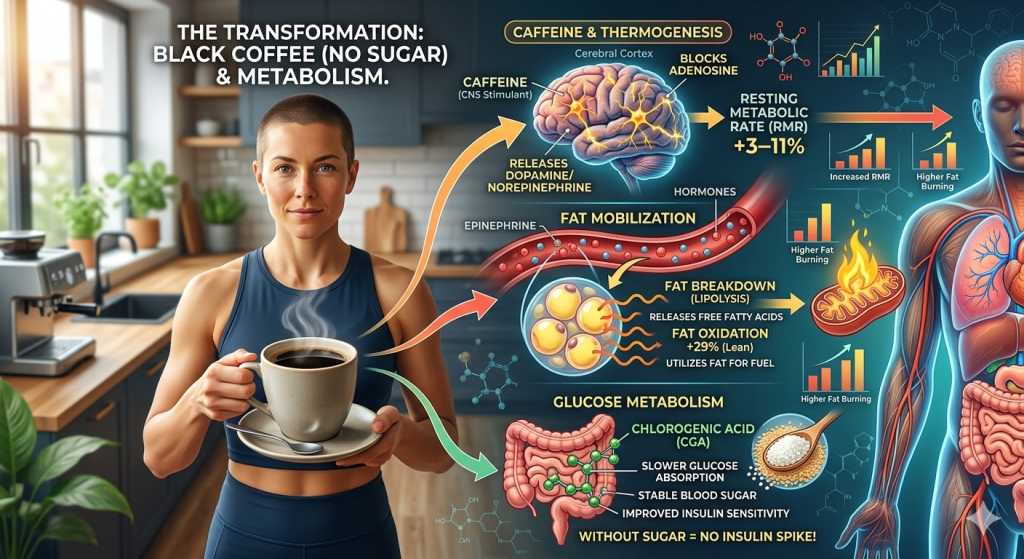
Caffeine triggers thermogenesis by activating brown adipose tissue, a specialized fat that generates heat rather than stores energy. This process occurs through adenosine receptor antagonism, which releases orexinergic neurons from inhibition and stimulates the sympathetic nervous system. When you consume black coffee, caffeine increases core body temperature and widens the distal-to-proximal skin temperature gradient. Studies reveal that caffeine enhanced muscle heat dissipation after 25 minutes of walking, indicating that additional caloric expenditure dissipates as heat energy. Specifically, the caloric cost of treadmill walking increased by 8% following caffeine treatment. This thermogenic response correlates positively with plasma lactate and triglyceride levels.
Black Coffee Increases Daily Caloric Expenditure
The advantage of black coffee without sugar is reflected in measurable metabolic changes observed in scientific research. Studies show that metabolic rate increases significantly for up to three hours after caffeine consumption in both normal-weight and obese individuals. For example, drinking six cups of coffee that provide about 600 mg of caffeine within a 12-hour period can raise daily energy expenditure by roughly 100 kcal. Caffeine also stimulates the release of catecholamines such as epinephrine and norepinephrine, which activate beta-adrenergic receptors and promote the production of cyclic AMP (cAMP). This biological process increases resting metabolic rate and creates conditions where the body burns calories more efficiently, even while at rest.
The Role of Chlorogenic Acids in Metabolic Enhancement
Black coffee contains chlorogenic acids, usually around 70–350 mg per cup, which work together with caffeine to support metabolic activity. One important advantage of black coffee without sugar is that it provides these natural compounds without adding extra calories or refined sugar.
Chlorogenic acids help activate AMP-activated protein kinase (AMPK), an enzyme that acts as the body’s energy regulator. This enzyme plays a key role in controlling how cells use glucose and fats for energy. These compounds may also increase the activity of carnitine palmitoyltransferase I, which helps the body use fatty acids as fuel, while reducing the activity of acetyl-CoA carboxylase, an enzyme involved in fat production.
The interaction between chlorogenic acids and caffeine can also influence metabolic pathways such as AMPKα-LXRα/SREBP-1c, which are linked to fat metabolism and lipid balance. Through these mechanisms, the body may improve how it manages stored fat and energy.
Overall, the presence of chlorogenic acids and caffeine highlights another advantage of black coffee without sugar, as this simple drink supports multiple metabolic processes while remaining low in calories.
Advantage of Black Coffee Without Sugar Does It Boost Fat Oxidation for Weight Loss?
Weight management applications of black coffee without sugar center on documented fat mobilization mechanisms. The advantages of black coffee without sugar extend to measurable changes in how your body processes stored fat.
How Caffeine Accelerates Fat Breakdown
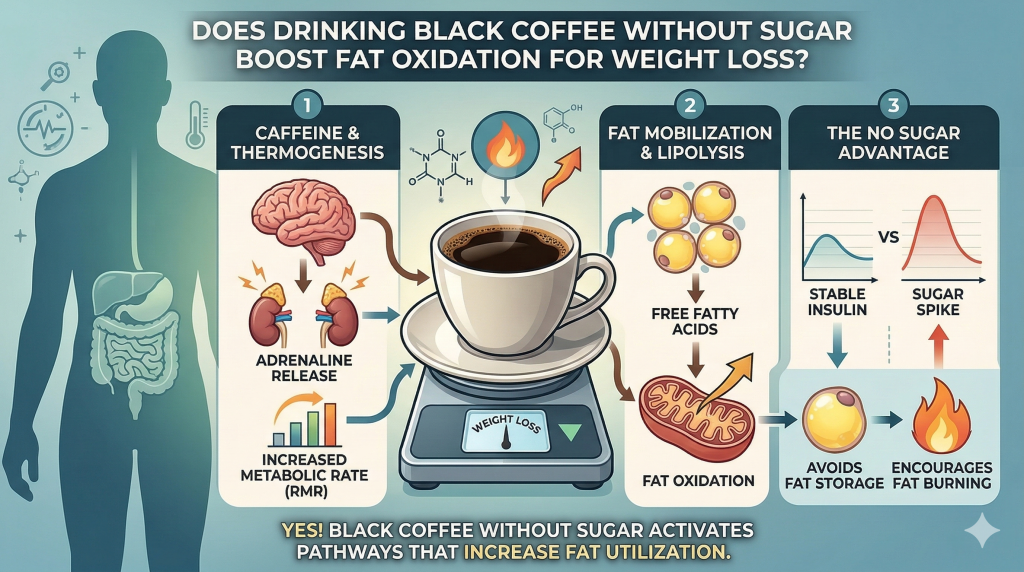
Caffeine ingestion stimulates lipolysis and doubles the turnover of lipids, of which 24% undergo oxidation while 76% enter recycling pathways. During steady-state conditions, oxidative free fatty acid disposal increased 44%, from 236 to 340 μmol/min. Caffeine promotes this breakdown by inhibiting phosphodiesterase in adipocytes, which maintains elevated cAMP levels and reduces the threshold for lipid solubility. The sympathetic nervous system mediates many of these effects through beta-adrenoceptor activation.
Black Coffee Suppresses Appetite Naturally Is An Advantage of Black Coffee Without Sugar
The benefits of drinking black coffee without sugar include appetite regulation through hormonal pathways. Caffeine consumed 0.5 to 4 hours before a meal suppresses acute energy intake. After drinking coffee, participants exhibited higher serotonin levels and lower ghrelin concentrations, with stronger effects observed in blends containing more chlorogenic acid. Coffee influences satiety hormones, causing people to eat slightly less and feel fuller.
Enhanced Lipid Metabolism Through Regular Consumption
Caffeine inhibits adipogenesis and adipocyte differentiation while promoting lipolysis and fat oxidation. These benefits of black coffee without sugar occur through modulation of the AMPK-SREBP signaling pathway, which depletes triglyceride and cholesterol levels. Caffeine activates AMPK to attenuate lipogenesis and enhance lipolysis, simultaneously inhibiting preadipocyte differentiation to reduce lipid accumulation.
Optimal Timing for Maximum Fat-Burning Effects
Consuming black coffee 30 to 45 minutes before exercise maximizes fat mobilization when caffeine peaks adrenaline levels. Afternoon intake proves particularly effective, increasing fat oxidation by 29% compared to 11% in morning sessions. Moderate caffeine intake combined with afternoon exercise at moderate intensity significantly increases maximal fat oxidation rates.
Can Drinking Black Coffee Without Sugar Help Regulate Blood Sugar Naturally?
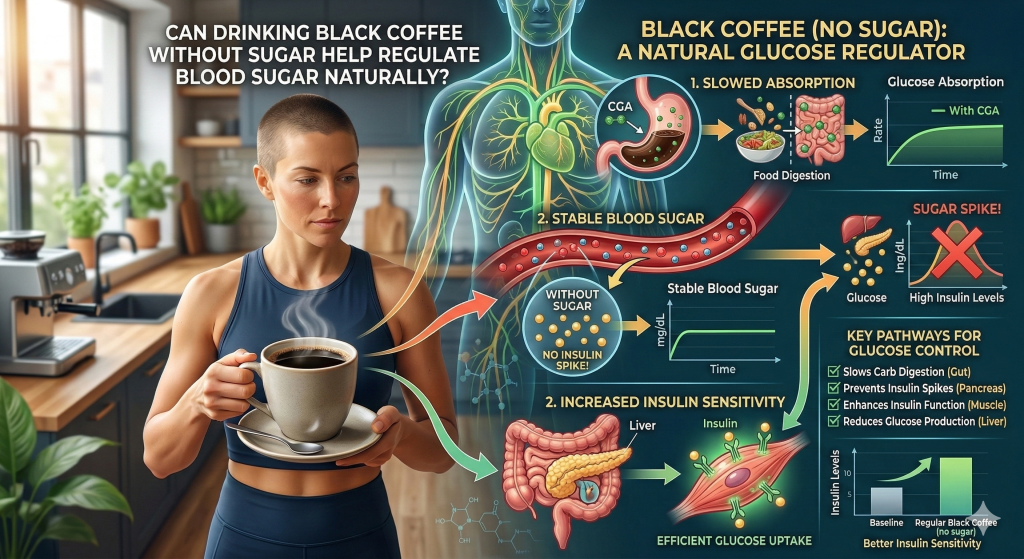
Blood sugar regulation represents another critical dimension where the advantages of black coffee without sugar become evident. Research data from large-scale population studies reveals specific mechanisms through which coffee compounds influence glucose metabolism and insulin function.
Coffee Improves Insulin Sensitivity
A Korean study examining coffee consumption patterns found that two cups daily correlated with a 23% reduced risk of elevated fasting insulin or HOMA-IR. Women drinking black coffee demonstrated particularly pronounced benefits. Consuming one cup or less daily reduced HOMA-IR by 26% and fasting insulin levels by 21%. For women who consumed two or more cups, HOMA-IR and fasting insulin levels improved by 27% and 30%, respectively. These benefits amplified further in women drinking three or more cups daily, showing a 34% and 36% reduction in HOMA-IR and fasting insulin levels.
Black coffee specifically produced a 36% reduction in both HOMA-IR and fasting insulin levels with two cups daily. Decaffeinated coffee induced a 97.5% increase in insulin sensitivity compared with water treatment, indicating that non-caffeine components contribute substantially to glucose regulation.
How Black Coffee Protects Pancreatic Beta Cells
Chlorogenic acids naturally found in coffee inhibit protein compounds that contribute to pancreatic cell death. Coffee phytochemicals preserve functional beta cell mass through enhanced mitochondrial function, lower endoplasmic reticulum stress, and prevention of misfolded proinsulin or amylin aggregates. This protection occurs through Nrf2 activation, which counteracts glucolipotoxicity effects in beta cells under oxidative stress.
Reduced Risk of Metabolic Syndrome
Studies indicate that consuming three to four cups per day associates with approximately 25% lower risk of developing type 2 diabetes compared to consuming less than two cups daily. The benefits of drinking black coffee without sugar extend to metabolic syndrome components, with moderate consumption linked to decreased prevalence in multiple populations.
How Much Black Coffee Is Safe to Drink for Better Metabolic Health?
Black coffee contains natural compounds such as caffeine and antioxidants. These components may help the body burn calories more efficiently and support overall metabolic function. When coffee is consumed without sugar or cream, it remains low in calories and does not add extra fat or carbohydrates to your diet.One important advantage of black coffee without sugar is that it can support better calorie control. Since it contains almost zero calories, it can fit easily into most diet plans. People who are trying to maintain a healthy weight often prefer plain coffee because it does not cause a sudden increase in sugar intake.
Black coffee can be a helpful addition to a healthy lifestyle when consumed in moderation. It is low in calories, rich in antioxidants, and may support metabolic function. Drinking around three to four cups per day is generally considered safe for most adults.Choosing plain coffee instead of sugary drinks also makes a big difference. The advantage of black coffee without sugar lies in its simplicity. It provides energy and potential metabolic support without unnecessary calories.
Recommended Daily Caffeine Intake for Adults
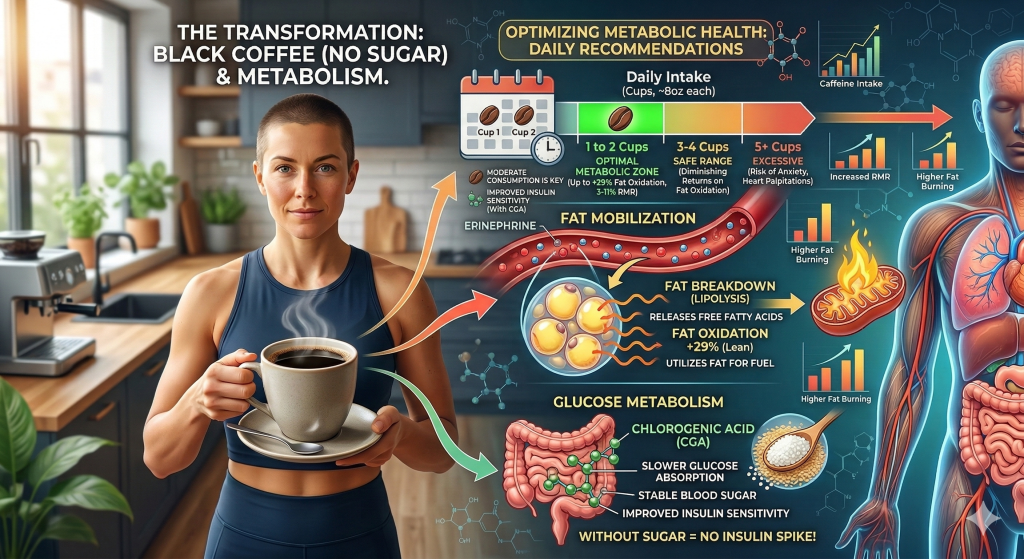
Most healthy adults can safely consume 400 milligrams of caffeine daily, equivalent to approximately four 8-ounce cups of brewed coffee. However, pregnant women should limit intake to 200 mg daily. Children under 12 should avoid caffeine entirely, while adolescents should restrict consumption to 100 mg daily. Average U.S. adults consume 135 mg of caffeine daily, or about 1.5 cups of coffee.
Why Sugar Addition Negates Metabolic Advantages
Additional calories from cream, milk, or sweeteners added to coffee easily negate any calorie deficit caused by caffeine. Added sugars break down quickly, raising blood sugar because they undergo rapid absorption. Studies suggest drinking three to four cups daily associates with 25% lower type 2 diabetes risk, but this advantage disappears when sugar enters the equation.
Potential Side Effects of Excessive Coffee Consumption
Doses exceeding 400 mg daily can cause insomnia, nervousness, restlessness, nausea, and increased heart rate. Caffeine toxicity occurs with intakes of 1.2 grams or more in one dose, while 10-14 grams proves fatal. Side effects at 1 gram include restlessness, irritability, vomiting, and tremors.
Individual Variations in Caffeine Response
Genetic variations in CYP1A2 categorize individuals as fast, moderate, or slow metabolizers. ADORA2A gene polymorphisms influence sensitivity to sleep disturbances and anxiety. Smoking accelerates caffeine clearance, whereas oral contraceptives double caffeine half-life[302]. Age affects metabolism, with adults 65-70 taking 33% longer to process caffeine than younger individuals.
Conclusion
As discussed, the advantage of black coffee without sugar lies in its ability to deliver notable metabolic benefits through increased thermogenesis, enhanced fat breakdown, and better insulin sensitivity. Consuming up to four cups per day can help maximize these effects while remaining within a generally safe intake range for most adults. The key factor is avoiding added sugar, which can counteract these metabolic benefits by increasing calorie intake and affecting blood glucose levels. Individual caffeine tolerance may vary depending on genetics, health status, and lifestyle habits. When consumed in moderation, black coffee can serve as a practical and scientifically supported beverage for supporting metabolic efficiency and overall wellness.